Japan · guide
How to Use a Rinko Bag in Japan: A Cyclist’s Guide to Trains

What is a rinko bag?
It’s basically a large foldable polyester bag that covers your bicycle and allows you to hop on a train or bus with it. We recommend buying one that folds neatly and flatly into the bottom of your bike bag.
Does every train in Japan accept bikes in rinko bags?
As long as it’s fully covered, we never had any problems. But to be safe we did check online in advance about our specific line.
Can you take the bus in Japan with a rinko bag?
This is a mixed answer. On intercity buses with a large storage space we succeeded to get on, although the drivers were much more strict about coverage than the train operators. On city buses, meaning low ones with no trunk, you have will most very likely not be able to get on with a bicycle in any form.
Bike disassembly for Japanese trains:
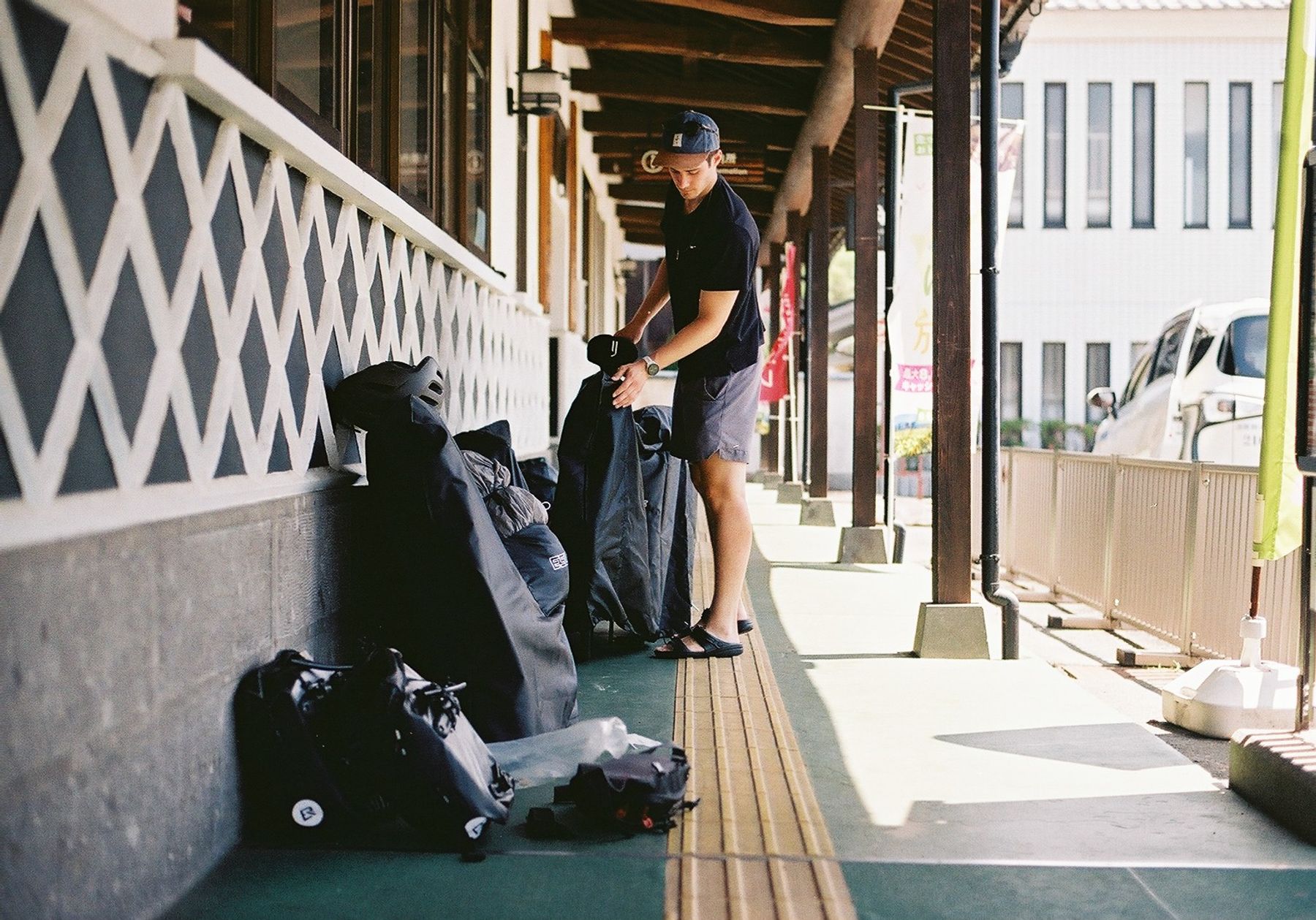
We recommend getting a rinko bag that fits the length of your bike minus the front wheel. This will make disassembly a three step process: front wheel goes off, saddle goes off, everything goes in the bag and poof your in the konbini buying onigiri or bento for the train ride.
Make sure you have some zipties or straps to keep the wheel and saddle in place.
Where to stand on the train:
When buying your ticket, request the first or last cabin and to be near a larger luggage area. Sometimes you can be seated at an accessible seating area which has larger space so you will not block the aisle.
What times to avoid the trains with your rinko bag?
All hours are officially allowed with a rinko bag, but hopping on a train with a meter long heavy bag at the 08:00 rush hour is considered impolite and will honestly be a miserable experience. Same goes for 16:00. Try to aim for the early morning, mid-day or evening time if it aligns with your plan for the day.
Do you need to pay extra for your bicycle on a Japanese train?
Nope! Should be entirely free.